
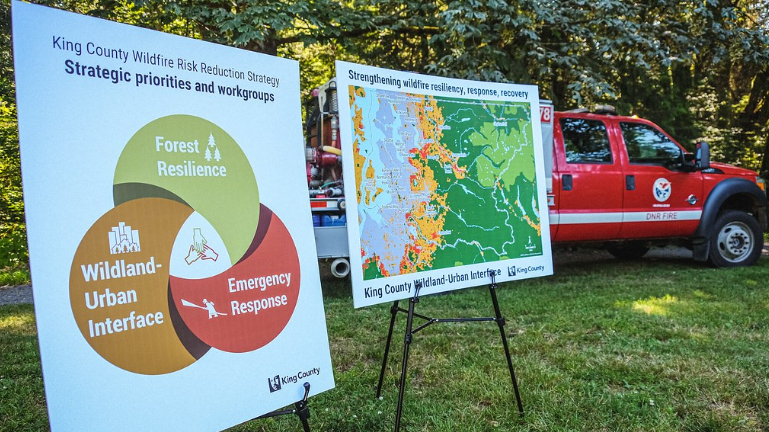

The King County Executive Climate Office is working to ensure resilience by coordinating efforts among departments and municipalities to prepare for the risks of increasing wildfires in Western Washington. A county-wide Wildfire Risk Reduction Strategy reveals some of the ways the county and partners plan to work toward more holistic wildfire prevention and response and more extensive forest recovery.
The county started preparing the strategy, first released in 2022, while completing its 2020 Strategic Climate Action Plan. That work underscored the connection between climate change and wildfire threats in the wildland-urban interface (WUI), which is the area where wilderness and developed land intersect.
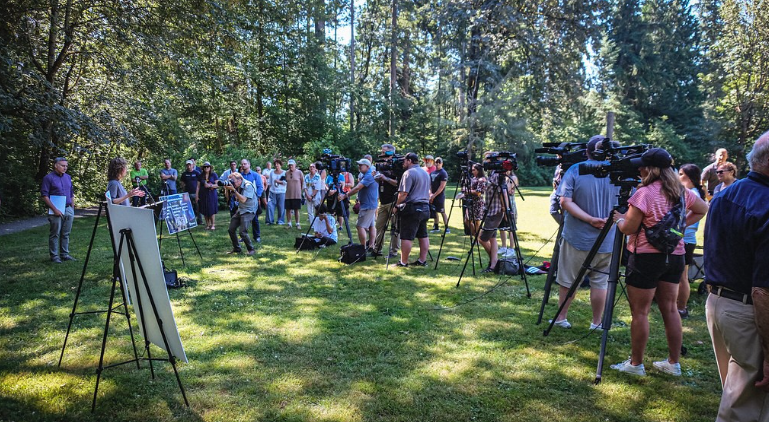
“We’ve all seen alarming news coverage of catastrophic fires across the American west, and that includes here in the Pacific Northwest,” King County Executive Dow Constantine said during a news conference announcing the strategy. “As King County faces hotter, drier summers as a result of climate change, there is the chance of devastating wildfires in communities like [ours].”
Constantine says growing populations, too, play a role in higher wildfire risk. Maps by the Washington Department of Natural Resources show around 15 percent of King County’s population lives in a WUI, leading to greater human and property risks when wildfires occur.
The plan lays out 12 objectives:
- Promote species and structural diversity within King County forests to improve wildfire resilience
- Develop post-fire response plans to support forest recovery and reduce near-term wildfire impacts on natural resources
- Increase technical and financial support for small forest landowners for wildfire risk reduction
- Develop community wildfire preparedness, response and recovery plans
- Advance wildfire risk reduction through effective policies, plans, and codes
- Create King County-specific wildfire mitigation best management practices and expand household-level wildfire mitigation assistance
- Increase monitoring and control of invasive species that increase wildfire risk in the wildland-urban interface.
- Implement the “Ready, Set, Go!” public education evacuation program in the wildland-urban interface
- Implement countywide training standards for all levels of wildfire response
- Establish partnerships and agreements to ensure timely and cost-effective access to wildfire firefighting resources
- Implement a coordinated approach to public education and outreach on wildfire risk reduction in King County
- Enhance and expand opportunities for shared learning and coordination related to wildfire risk reduction
The full report lays out a roadmap for achieving these objectives and describes the responsible or related parties involved in each one.
In addition to preparing for wildfires, King County ECO’s climate preparedness and resilience program works to coordinate research, resources and partnerships regarding sea level rise and extreme heat mitigation.



 King County Executive Climate Office (ECO)